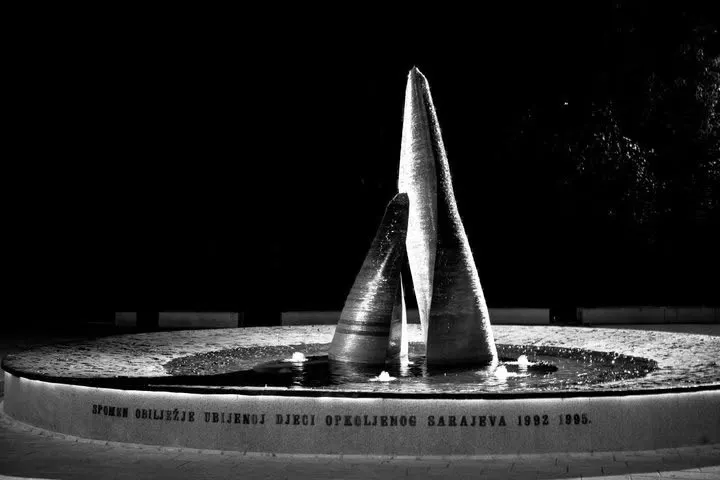
Returning to Bosnia: Reflections on Justice, Stigma, and Survivor-Centred Practice
Authored by Dr Ingrid Elliott, MBE, Director and Co-Founder of Synergy for Justice
Sometimes returning to a place which you hold so dear in your heart only makes that fondness grow. For many of us who had the privilege to work in Bosnia after the war, the experience had a profound impact. When I look back, I recognise how much we achieved, what we learned together, and the new paths we forged in terms of international criminal investigations and prosecutions. With deep affection and admiration, I remember our integrated Bosnian and international team that worked on Srebrenica genocide investigations, forensics, prosecutions and appeals. Professionally, it is one of the highlights of my working life. Personally, I made life-long friends. Interestingly, Synergy for Justice has some ‘Bosnian roots’ and influence – three of the current Directors met and worked together in Bosnia.
Bosnia has over 20 years of experience working on war crimes cases, and on CRSV in particular. “By the end of 2024, the domestic judiciary had adjudicated a total of 773 war crimes cases involving 1,209 defendants. More than one-quarter of adjudicated war crimes cases involved CRSV, amounting to 200 cases involving a combined 298 defendants. … As of the end of 2024, there were 226 ongoing cases across all BiH jurisdictions. 53 cases involving 121 defendants – comprising nearly a quarter of all war crimes cases pending before courts across all jurisdictions in Bosnia and Herzegovina (BiH) – involve CRSV.” I doubt that there is anywhere with that extensive record of CRSV court proceedings or a cadre of multi-disciplinary professionals with such depth of experience and lessons learned. The CRSV response in Bosnia has been critical in revealing the extent of CRSV directed against men and boys in conflict, catalysing too our recognition of children affected by CRSV, as well as the long-term impacts and inter-generational trauma from CRSV.
When I returned to Sarajevo in early February, armed with Synergy’s CARSV Stigma Toolkit for Justice, I was reminded that Bosnia is a jurisdiction in which its CRSV justice actors deeply understand how stigma creates lasting barriers to justice and creeps into justice processes. It drives attrition (drop out) rates in CRSV cases and can inflict revictimisation and retraumatisation on survivors accessing justice. I spoke with many stakeholders about how important this toolkit is and some expressed a wish that it had been available 20 years ago, when Bosnia started its CRSV justice journey.
CRSV cases continue to be reported for the first time in Bosnia, as barriers slowly fall away over time (for example, when spouses who have not been told of the violence pass away). Other cases have been a work-in-progress for some years. I also found that war crimes accountability is not given the priority it once was, and that a new generation of personnel is staffing that work, many without the benefit of training or experience of their predecessors.
New challenges are also emerging, in accountability for broader forms of sexual and gender-based crimes, as well as in Bosnia’s requirement to implement the Istanbul Convention and efforts to ensure that law is applied in non-discriminatory and stigma-free manner. The recognition and debunking of CRSV myths, misconceptions, gender stereotypes in justice processes, the survivor-centred, trauma-informed learning from CRSV cases, and the depth of multi-disciplinary expertise have not transferred or translated easily across to justice for broader forms of sexual and gender-based violence, including domestic violence and femicide (although see). For example, Bosnia has only recently amended their criminal law at the federation level to include a consent standard for rape. Lessons learned on patterns of gender-based violence in war time are less recognised in peacetime. One illustration is a 2023 case of livestreamed femicide, after a judge had failed to issue a restraining order against the perpetrator, despite his pattern of escalating harm and multiple complaints.
Revisiting Bosnia has reinforced for me the potential and the value in harnessing Bosnia’s CRSV experience, its hard-won lessons learned and advances in survivor-centred approaches (especially around models for psychological support and assistance). Such valuable expertise should be used to support the next generation of justice actors in Bosnia as it continues to meet the accountability needs of CRSV survivors, to drive and inform better practices, debunk myths and stigma in peace-time sexual and gender-based violence, and to export Bosnian expertise to countries which are only just beginning their journey on CRSV response and accountability. Working with Bosnian experts to road-test, fine-tune, and expand the CRSV Stigma in Justice Toolkit will be an important next step.